

Helping you stay compliant with the ACoP L8
To comply with ACoP L8 and meet the Health & Safety Executive (HSE) guidelines on Legionella control, the essential first step is to carry out a Legionella risk assessment. At Dantek Environmental Services, we specialise in providing thorough, HSE-compliant risk assessments to help ensure your water systems are safe and legally compliant.
Legionella Risk Assessments
Speak to us today and take the first step towards ensuring you are compliant.
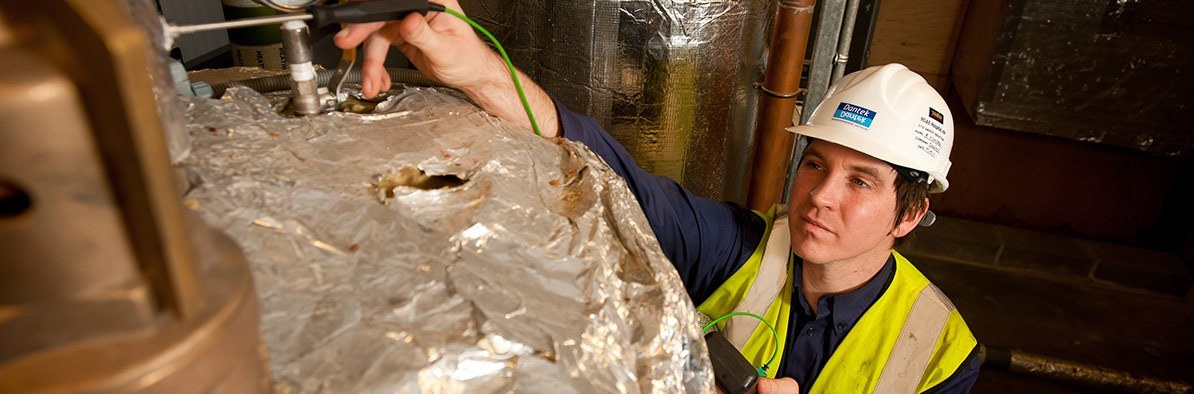
At Dantek Environmental Services, we make Legionella risk assessments straightforward and stress-free. Our experienced specialists conduct a thorough inspection of your property, clearly identifying any risks within your water systems and explaining them in plain language. We’ll then guide you through the steps needed to minimise the risk of Legionella bacteria, and where appropriate, recommend ongoing solutions like Legionella monitoring or regular water sampling and testing for added protection.
Following the ACoP L8 guidance is critical for workplace compliance. While it isn’t legally binding on its own, non-compliance may breach the Health and Safety at Work Act 1974 and COSHH regulations, exposing your business to risk.
We regularly support clients across the education, healthcare, housing, and commercial sectors. Whether you manage a single site or multiple locations, our team can tailor your assessment – and if needed, provide complementary services such as water tank cleaning or TMV servicing to keep your systems compliant and safe.
Your risk assessment includes
- A full survey carried out by one of our qualified risk assessors.
- A register of any systems that fall within the ACoP L8 guidance.
- AUTOCAD schematic drawings of your complete water system.
- A report on the current condition of your water system and water storage tanks.
- A check that your water temperatures are satisfactory to control legionella.
- Photographs of any identified risk areas.
- A full explanation of our findings and actions to achieve ACoP L8 compliance.
- A plan for on-going maintenance.
- Documentation to show you’re taking the right steps towards compliance.
- Access to an online logbook containing all your information, reports and data.
How much does a risk assessment cost?
The cost of your legionella risk assessment could be as little as £375 for a single site. That’s the price for a standard domestic hot and cold system with a cold water storage tank, calorifier, showers and outlets. And that includes the risk assessment, full report and a logbook for monthly monitoring. The cost can be reduced for multi-site customers and even further for systems with low risk systems such as point of use water heaters only.
The final price depends on the size of your property, how complex your systems, and whether you need us to inspect a single site or multiple locations. But we’ll always be happy to provide you with a tailored quotation before going ahead.
Who needs an assessment?
Any business, landlord, or property manager responsible for water systems must assess the risk of Legionella. This includes employers, those in control of premises, and anyone with health and safety responsibilities related to water systems. A Legionella risk assessment should typically be reviewed at least every two years or whenever there is a significant change to the water system or its usage. Regular monitoring and maintenance are also essential between assessments. Under the Health and Safety at Work Act and the HSE’s Approved Code of Practice (L8), landlords and employers have a legal duty to manage the risk of Legionella bacteria in water systems.
What happens during a Legionella risk assessment?
Our Legionella risk assessment is carried out in several stages, following HSE guidance and BS 8580-1:2019.
- Preparing for the assessment
We’ll agree the scope of the assessment with you, including the buildings, water systems and assets to be covered. We’ll arrange a convenient visit date, confirm the site contacts and review any available drawings, previous assessments, monitoring records and relevant site information. - Inspecting your site
On arrival, our qualified risk assessor will meet the person responsible for the site and review how Legionella risks are currently controlled. A suitable member of your team should be available to help identify plant, equipment and relevant water systems.We’ll inspect the systems and collect detailed information about the site, its water assets, control measures and operating conditions. Where appropriate, we may take samples in line with our safety procedures. - Identifying risks
The information gathered during the inspection is used to identify potential sources of risk, assess how effectively those risks are being controlled and determine whether further action is required. - Producing your assessment
We’ll prepare a detailed written report supported by system schematics showing the relevant plant, components and general flow of the water system. Any sampling results and other relevant findings will also be included.Each identified risk is assessed and prioritised, with recommendations designed to eliminate or reduce the risk of Legionella bacteria. - Explaining the findings
We’ll present the completed assessment to you and talk through the findings, recommended remedial work and ongoing maintenance requirements. You’ll have the opportunity to ask questions and clarify the actions needed.
The assessment is non-destructive and is based on the information visible during the visit, together with information provided by the customer and site representatives. The duty holder or responsible person remains responsible for implementing the recommendations and maintaining the necessary written control scheme.
1. Prep for the assessment
2. Inspecting your site
3. Identifying risks
4. Producing your assessment
5. Explaining the findings